
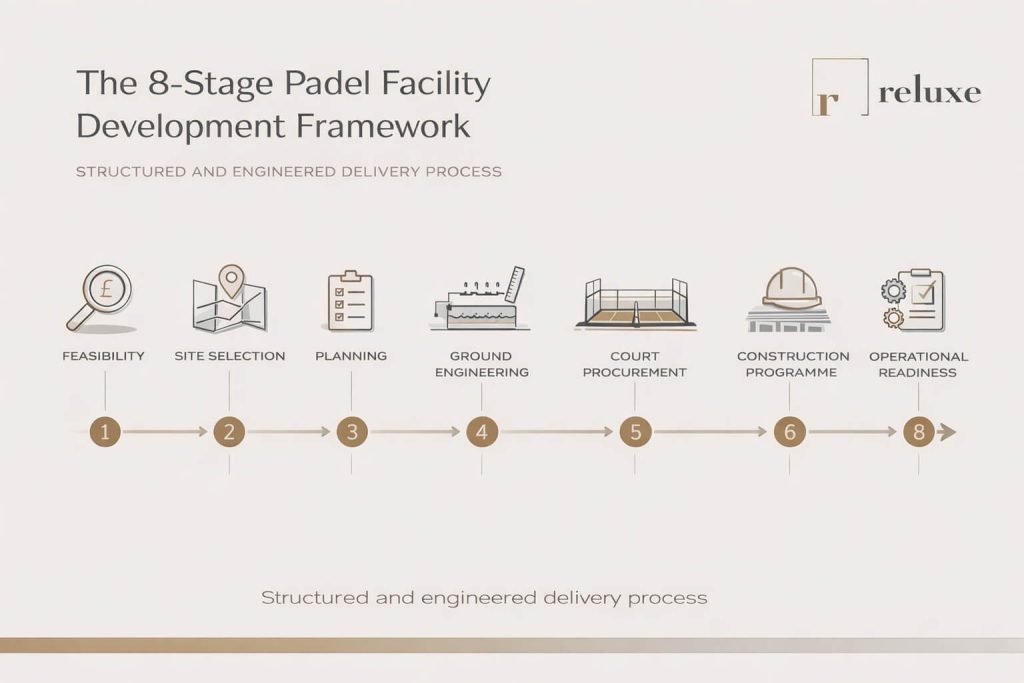
Building a padel facility in the UK is not simply a matter of purchasing a court system and installing it on a flat piece of ground. It is a regulated leisure development that combines planning, engineering, construction and commercial strategy.
At the surface level, a padel court may appear to be a contained, modular product: glass walls, steel frame, artificial turf and lighting. In reality, delivering a viable facility involves far more than the court enclosure itself. Ground conditions, drainage, structural tolerances, acoustic control, lighting design, fire safety, access routes, utilities and long-term maintenance all play a role in whether the project performs as intended.
In the UK in particular, climate and planning constraints introduce additional layers of complexity. High rainfall demands properly engineered sub-bases and drainage systems. Proximity to residential areas can trigger noise and lighting assessments. Indoor conversions must satisfy building regulations, ventilation requirements and fire strategy compliance. Lead times for planning decisions and utility upgrades can materially affect the programme and budget.
Commercial viability is equally important. A padel facility must function not only as a construction project, but as a sustainable operating business. Court utilisation rates, programming strategy, ancillary revenue streams and staffing models should be considered from the outset, not after installation.

This guide sets out what is truly involved in delivering a padel facility in the UK, from early-stage feasibility through to construction, commissioning and operational readiness. It brings together engineering considerations, planning realities and commercial factors to provide a structured overview for developers, operators and investors.
If you are looking for more detailed breakdowns of specific elements, you may also find the following resources useful:
- Padel Court Construction: a technical overview of build components and installation stages
- Padel Court Cost in the UK: detailed cost drivers and budgeting considerations
- Indoor Padel Court Construction UK: specific challenges associated with warehouse and indoor conversions
What follows is a step-by-step examination of the full development process, not just how to build a court, but how to deliver a compliant, engineered and commercially viable padel facility in the UK.
Table of Contents
- 1. Market Feasibility & Commercial Viability
- 2. Site Selection & Planning Risk
- 3. Ground Engineering & Structural Requirements
- 4. Indoor vs Outdoor Delivery Complexity
- 5. Court System Procurement & Specification
- 6. Facility Layout & Revenue Integration
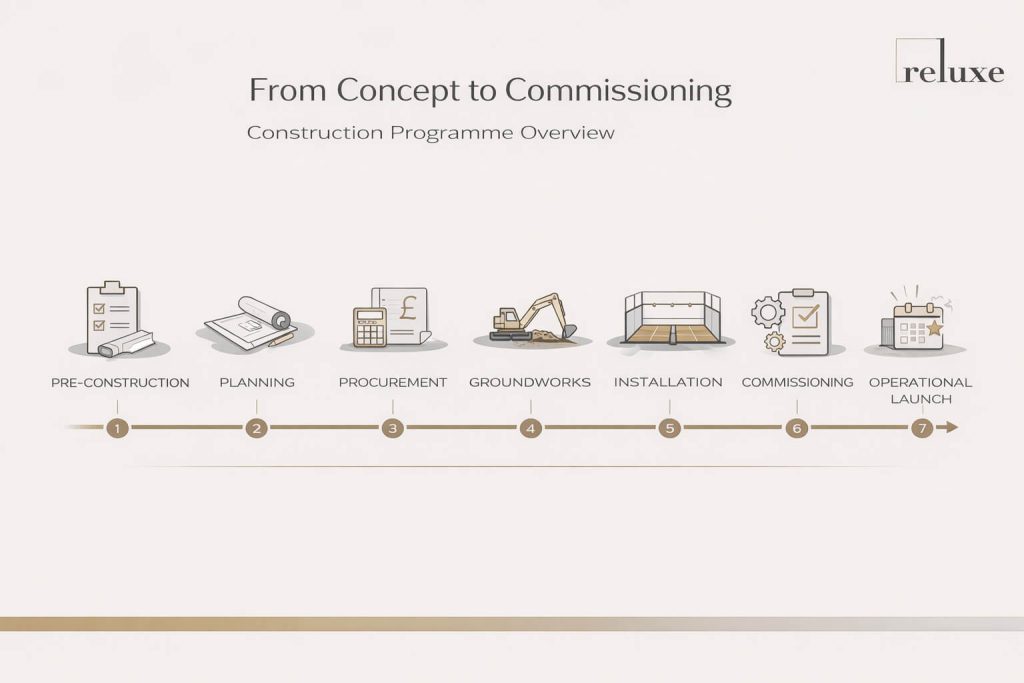
- 7. Construction Programme & Phasing
- 8. Operational Readiness & Long-Term Maintenance
- Conclusion
1. Market Feasibility & Commercial Viability
Before any design drawings are commissioned or contractors engaged, the most important stage in building a padel facility is commercial validation. Many projects fail not because the courts were poorly constructed, but because demand, pricing and operational realities were misjudged.
A padel facility is an operating business first and a construction project second. Establishing realistic demand and revenue assumptions at the outset materially reduces long-term risk.
1.1 Catchment & Demand Analysis
Population Density
Padel thrives in areas with sufficient population density to sustain regular court utilisation. As a broad rule of thumb, facilities within a 10 – 15 minute drive time of a dense residential or mixed-use urban population perform more consistently than isolated rural sites.
However, density alone is not enough. The population must be accessible, active and likely to engage with racquet sports or fitness-led leisure activities.
Competing Supply
Mapping existing courts within the catchment is essential. This includes:
- Dedicated padel clubs
- Tennis clubs that have added padel
- Leisure centres
- Multi-sport venues
- Private members’ facilities
A new facility located within a saturated market will require either superior programming, premium positioning or price competitiveness to capture share.
Conversely, being the first operator in a strong catchment can provide a significant early-mover advantage, but demand still needs to be validated rather than assumed.
Travel Time Modelling
Drive-time analysis often reveals more insight than postcode radius mapping. A 10-minute drive in a dense urban area may cover a far smaller population than 10 minutes in a suburban environment with faster road access.
Understanding:
- Peak traffic patterns
- Public transport accessibility
- Parking provision
can materially influence realistic utilisation levels.
Demographic Fit
Padel appeals to a broad audience, but certain demographics drive stronger early adoption:
- Young professionals
- Dual-income households
- Corporate communities
- Active family segments
Affluent catchments tend to support higher court hire rates and stronger ancillary spend (coaching, leagues, food and beverage).
Demographic alignment should inform pricing strategy, programming and positioning from the outset.
1.2 Revenue Modelling
Revenue modelling should be conservative and stress-tested. Over-optimistic occupancy assumptions are one of the most common commercial mistakes.
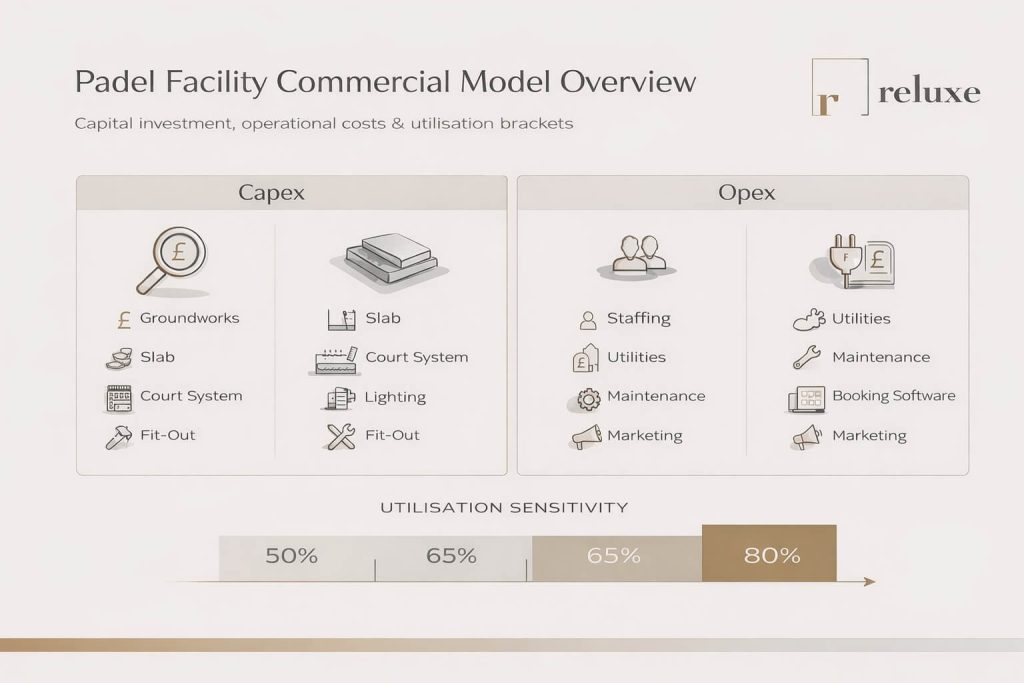
Court Utilisation Ranges
For modelling purposes, it is prudent to assess three scenarios:
- 50% utilisation: Conservative / early-stage performance
- 65% utilisation: Stabilised mid-performance
- 80% utilisation: Strong-performing facility in a high-demand area
A four-court facility operating at 80% utilisation during peak hours may look compelling on paper, but sustaining that performance year-round requires active programming, coaching integration and community engagement.
Revenue Per Court Realism
Revenue per court varies significantly depending on:
- Pricing model (peak/off-peak)
- Membership structure
- Coaching density
- Event hosting
- Corporate bookings
Headline figures often cited in industry discussions represent top-performing sites rather than the average facility. Financial modelling should assume sustainable, not exceptional, performance.
Coaching, Leagues, Events & F&B
Court hire alone rarely maximises revenue potential. High-performing facilities typically incorporate:
- Structured coaching programmes
- League systems
- Americano events
- Corporate tournaments
- Café or bar offerings
- Retail merchandise
These additional streams increase dwell time and average revenue per visitor. However, they also increase staffing and operational complexity.
Break-Even Sensitivity
Break-even analysis should test:
- Slower adoption curves
- Seasonal utilisation dips
- Unexpected operational costs
- Delays in planning or opening
Understanding how long the facility can operate below target utilisation without financial stress is critical.
A more detailed breakdown of capital expenditure components can be found in our guide to
1.3 Capital vs Operational Risk
Construction budgets often receive detailed scrutiny, but operational risk is frequently underestimated.
Capital Expenditure (Capex)
Capex includes:
- Groundworks
- Foundations
- Court systems
- Lighting
- Ancillary fit-out
- Professional fees
- Planning costs
It is essential to include contingency allowances for unforeseen ground conditions, planning requirements or specification upgrades.
Operational Expenditure (Opex)
Opex typically includes:
- Staff salaries (management, coaches, front-of-house)
- Utilities (particularly lighting and indoor HVAC)
- Insurance
- Maintenance and cleaning
- Booking system fees
- Marketing
Even a well-located facility requires structured management. Fully automated, unmanned models have proven difficult to sustain without active programming and oversight.
Working Capital Reserve
Facilities should allow for 6 – 12 months of operational runway during ramp-up. Revenue typically stabilises over time as membership builds and programming matures.
Insufficient working capital is one of the primary reasons new leisure facilities struggle, regardless of initial demand.
Staffing Assumptions
Staffing structure will vary depending on scale, but assumptions should consider:
- Full-time management
- Coaching provision
- Reception or supervision requirements
- Cleaning and maintenance support
Underestimating staffing needs can lead to inconsistent member experience and lower long-term retention.
A robust feasibility stage provides clarity before committing to planning applications or construction contracts. When approached methodically, it reduces financial risk and strengthens the long-term viability of the facility.
2. Site Selection & Planning Risk
Selecting the right site is often the single most critical decision in the development of a padel facility. Construction complexity, planning risk, programme duration and long-term commercial performance are all directly influenced by site choice.
A well-located but poorly assessed site can introduce unexpected structural, regulatory or environmental challenges. Conversely, a strategically selected site with early planning engagement can significantly reduce delivery risk.
2.1 Site Types
Different site typologies present different engineering and planning considerations.
Greenfield Sites
Greenfield development can offer design flexibility and optimal layout planning. However, it typically involves:
- Full planning permission
- Drainage strategy approval
- Ecological considerations
- Ground investigation
- Utility connection works
Ground conditions are rarely fully understood without investigation, and unexpected soil or contamination issues can materially affect cost.
Existing Sports Clubs
Integrating padel into an established sports club or tennis facility can reduce some commercial risk due to an existing member base.
However, considerations include:
- Reconfiguration of underutilised courts
- Shared access routes
- Impact on existing parking capacity
- Noise implications for neighbouring properties
Planning consent may still be required depending on the scope, lighting changes or alterations to existing facilities.
Warehouse Conversions
Warehouse and light-industrial conversions are increasingly common for indoor padel facilities.
They present advantages such as:
- All-weather operation
- Controlled environment
- Extended operating hours
But also introduce:
- Building regulations compliance
- Fire safety strategy
- Structural slab loading verification
- Ceiling clearance conflicts
- Ventilation and condensation management
Indoor conversions often require more technical coordination than outdoor installations.
Rooftop & Mixed-Use Developments
Rooftop installations and mixed-use developments are structurally complex and demand careful engineering coordination.
Additional considerations include:
- Structural load capacity
- Vibration transfer
- Acoustic mitigation
- Wind exposure
- Planning sensitivity in urban environments
While architecturally appealing, these sites typically require specialist structural and acoustic input.
2.2 Planning Permission
Planning is frequently underestimated during early-stage feasibility.
In many UK locations, padel facilities require full planning consent or a change of use. Early engagement with the local planning authority can significantly reduce uncertainty.
For a more detailed breakdown of planning requirements, see:
Do You Need Planning Permission for a Padel Court?
Change of Use
Converting a warehouse, industrial unit or alternative commercial space may require formal change-of-use approval depending on the current planning classification.
The complexity of this process varies by local authority and site context.
Noise Assessments
Padel produces repetitive impact noise from ball strikes and player interaction with glass and mesh enclosures.
Where residential properties are within close proximity, local authorities commonly request:
- Noise impact assessments
- Predicted decibel levels
- Proposed mitigation measures
An acoustic strategy should therefore be considered before submitting planning.
Lighting Spill
Floodlighting design must account for:
- Lux levels on the playing surface
- Light spills beyond the boundary
- Glare impact on neighbours
Lighting assessments are often required as part of planning submissions, particularly for outdoor courts.
Operating Hours
Local authorities may impose restrictions on:
- Opening hours
- Evening use
- Weekend operation
Operating hours directly affect commercial modelling and should be clarified during pre-application engagement.
Pre-Application Engagement
Pre-app consultation with planning officers allows early identification of potential objections or conditions.
This stage can clarify:
- Required supporting reports
- Environmental considerations
- Design expectations
Although it introduces additional time and cost, it can significantly reduce refusal risk later.
2.3 Neighbour & Environmental Constraints
Even where planning consent appears straightforward, site-specific environmental factors must be assessed.
Proximity to Residential
Facilities located close to housing require careful consideration of:
- Noise transmission
- Lighting spill
- Traffic generation
Buffer zones, landscaping and acoustic measures can reduce risk but must be factored into site layout and cost planning.
Flood Risk
The UK climate requires robust drainage design.
Sites located within flood-risk zones may require:
- Flood risk assessments
- Sustainable drainage strategies
- Raised slab levels
Failure to address flood risk early can delay planning approval.
Drainage
Effective drainage is essential to ensure long-term court performance.
Surface water management must consider:
- Sub-base permeability
- Drainage falls
- Connection to existing storm systems
- Local authority discharge approvals
Groundworks and drainage design are explored in more technical detail here:
Access & Highways
Traffic generation and parking capacity are frequently scrutinised during planning.
Considerations include:
- Vehicle access routes
- Peak traffic impact
- Parking ratios per court
- Safe pedestrian access
Inadequate parking provision can trigger planning objections or operational constraints.
A structured approach to site selection and planning risk ensures that engineering feasibility, regulatory compliance and commercial performance are aligned before construction begins.
3. Ground Engineering & Structural Requirements
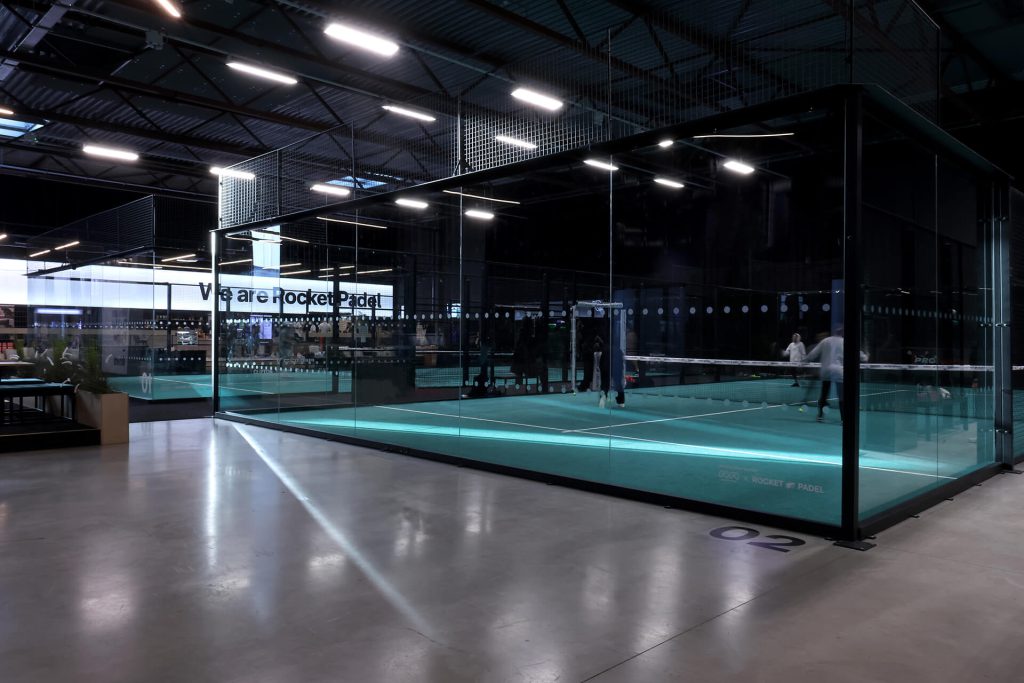
Once site viability and planning risk have been assessed, the project moves into detailed engineering. This is the stage where long-term performance is either secured or compromised.
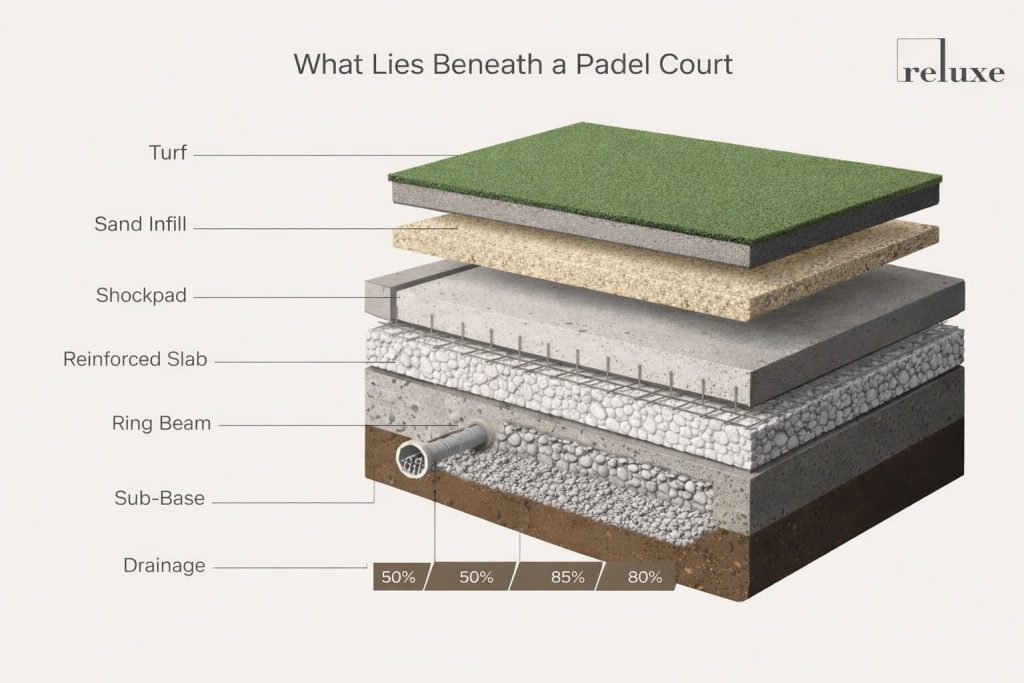
A padel court may appear modular above ground, but its success depends heavily on what lies beneath it. Ground engineering and structural tolerances directly influence safety, durability and playing consistency.
3.1 Ground Investigation
Before any slab is poured, a formal ground assessment should be undertaken.
Soil Conditions
Different soil types behave differently under load and moisture variation. Clay, made ground, or previously disturbed land can introduce movement or differential settlement if not properly engineered.
A preliminary geotechnical review helps determine whether:
- Additional excavation is required
- Sub-base reinforcement is necessary
- Ground improvement measures are needed
Bearing Capacity
Padel courts require stable support beneath the slab and ring beam. Insufficient bearing capacity can lead to:
- Settlement
- Cracking
- Glass misalignment
- Structural stress on steel frames
Load calculations should be aligned with the structural design of the enclosure system.
Contamination
On brownfield or industrial sites, contamination may require:
- Soil testing
- Remediation
- Protective membranes
Ignoring contamination risk can delay construction and significantly increase cost if discovered mid-programme.
Topographical Survey
Accurate topographical data ensures:
- Correct slab levels
- Appropriate drainage falls
- Integration with existing site gradients
Even small level discrepancies can affect water runoff and long-term surface performance.
3.2 Foundations & Ring Beam
The structural interface between ground and court enclosure is typically formed by a reinforced concrete slab and perimeter ring beam.
Reinforced Concrete Perimeter
The ring beam anchors the steel structure and glass panels. It must be:
- Structurally designed
- Correctly reinforced
- Precisely aligned
Anchor plate positioning and tolerance accuracy are critical to prevent misalignment during enclosure installation.
Slab Tolerances
Padel courts require tight tolerances to ensure:
- Consistent ball rebound
- Correct turf installation
- Accurate glass alignment
Excessive deviation can cause uneven playing characteristics and stress on structural components.
Precision during slab preparation reduces long-term maintenance risk.
Drainage Falls
Drainage design must account for:
- Surface water runoff
- Sub-base permeability
- Integration with site drainage systems
The UK climate demands effective water management. Poorly designed falls can result in standing water, turf degradation and sub-base failure.
3.3 Utilities & Power
Electrical and mechanical requirements should be assessed early in the design process.
3-Phase Power
Commercial facilities typically require 3-phase power to support:
- Court lighting
- HVAC systems (for indoor sites)
- Reception and F&B areas
Upgrading site supply or coordinating with the local Distribution Network Operator (DNO) can introduce programme implications.
Lighting Load
Lighting systems must meet appropriate lux levels for safe play. Electrical capacity should be calculated to support:
- Simultaneous peak use
- Emergency lighting
- External circulation lighting
Energy efficiency and operating cost considerations should be factored into the specification.
Indoor HVAC Load
Indoor facilities introduce additional mechanical requirements:
- Ventilation rates
- Humidity control
- Temperature regulation
High humidity without proper ventilation can affect both player comfort and material durability, particularly turf and steel components.
A technically robust foundation stage protects the integrity of the entire facility. For a broader overview of construction sequencing and component integration, see:
4. Indoor vs Outdoor Delivery Complexity
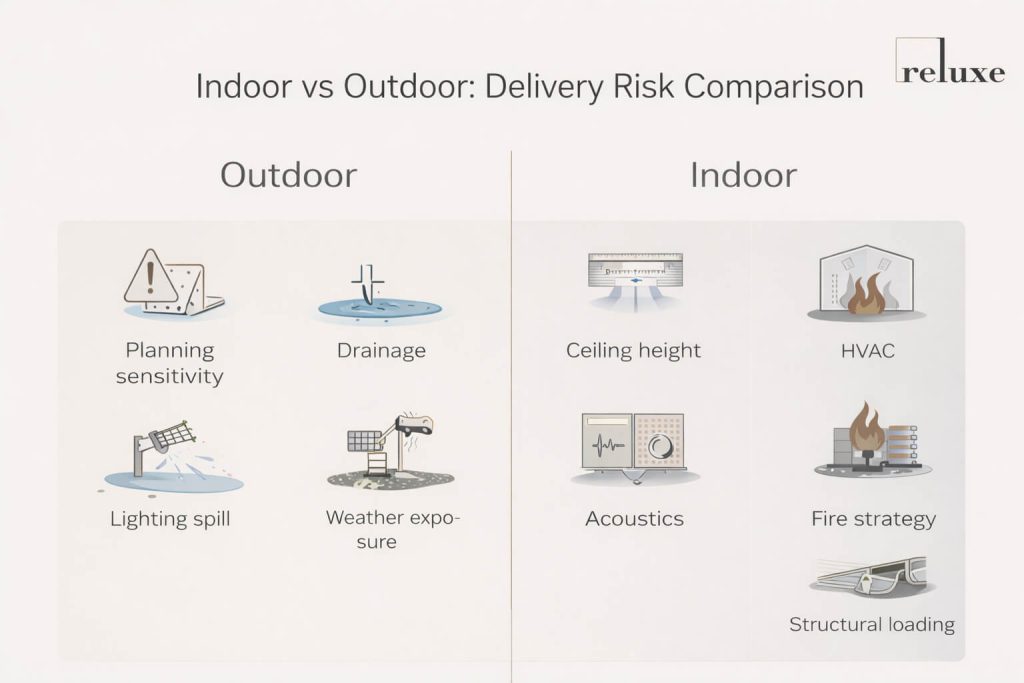
At the surface level, the difference between indoor and outdoor padel may appear straightforward: one is enclosed, the other exposed. In practice, indoor facilities introduce a significantly higher level of engineering coordination and regulatory oversight.
While outdoor courts are influenced primarily by ground conditions, drainage and planning constraints, indoor facilities require detailed structural, acoustic, mechanical and life-safety integration.
This is where many projects encounter unexpected complexity.
4.1 Ceiling Height & Structural Clearance
Ceiling height is one of the most frequently misunderstood aspects of indoor padel delivery.
7m Minimum
A minimum internal clear height of approximately 7 metres is generally considered acceptable for recreational play. However, this should be measured as clear structural height, not overall building height.
Beams, lighting rigs, sprinkler systems, or mechanical ductwork can reduce usable clearance.
8m+ Preferred
For stronger playability and long-term commercial appeal, 8 metres or more of clear height is preferred. Higher ceilings:
- Improve the quality of lobs
- Enhance the playing experience
- Increase suitability for league and tournament play
Facilities built to minimal tolerances may struggle to attract advanced players.
Truss Conflicts
Industrial warehouse conversions frequently involve steel trusses or portal frames that interrupt clean vertical clearance.
Conflicts may arise between:
- Structural beams
- Lighting positions
- Fire suppression systems
- HVAC ductwork
Early structural coordination ensures the court enclosure sits within true clear space without compromising compliance or aesthetics.
4.2 Acoustics
Padel produces repetitive impact noise from ball strikes, glass rebounds and player movement. Indoor environments amplify these sounds significantly.
Reverberation
Large warehouse volumes can create prolonged reverberation times, leading to:
- Poor player experience
- Communication difficulty
- Potential neighbour complaints
Reverberation control should be assessed at the design stage rather than treated as an afterthought.
Absorption Strategy
Effective acoustic design may include:
- Suspended absorption systems
- Wall-mounted acoustic panels
- Ceiling baffles
- Strategic material selection
The objective is to reduce sound reflection without compromising lighting or ventilation.
Planning Noise Compliance
Even indoor facilities can require external noise assessments where residential properties are nearby. Impact noise transmitted through the building structure or openings can trigger planning conditions.
Acoustic mitigation should align with both building performance and planning compliance.
4.3 Ventilation & Condensation
Indoor padel generates significant heat and humidity from player activity.
Indoor Humidity
Without adequate ventilation, humidity levels can rise quickly, leading to:
- Player discomfort
- Surface degradation
- Condensation on glass panels
Mechanical ventilation strategies should account for occupancy density and peak usage.
Player Comfort
Thermal comfort affects dwell time and repeat visits. Poor air movement or temperature imbalance can undermine commercial performance even if construction is technically sound.
Long-Term Durability
Sustained humidity without ventilation can accelerate:
- Corrosion of steel components
- Turf degradation
- Structural wear
Environmental control, therefore, directly impacts lifecycle cost.
4.4 Fire Strategy & Building Regulations
Indoor facilities must comply with UK building regulations, particularly when converting existing structures.
Means of Escape
Court layouts must allow for:
- Clear escape routes
- Adequate exit widths
- Unobstructed circulation
Glass enclosures and spectator areas must not compromise evacuation pathways.
Occupancy Load
Multi-court facilities with spectators, coaching groups and F&B areas increase occupancy density. Fire strategy should account for maximum occupancy scenarios rather than average use.
Conversion Compliance
Warehouse conversions may require:
- Fire compartmentation upgrades
- Emergency lighting
- Alarm integration
- Structural fire protection
Engaging building control early reduces the risk of late-stage redesign.
Indoor delivery requires integrated coordination between structural, mechanical and compliance disciplines. For a deeper technical examination of indoor-specific considerations, see:
Indoor Padel Court Construction UK
5. Court System Procurement & Specification
Selecting the correct court system is not simply a purchasing decision, it is a specification exercise. Material quality, durability, warranty and long-term performance should take priority over headline pricing.
A poorly specified system may reduce upfront cost but increase lifecycle expense, maintenance burden and reputational risk.
5.1 Glass & Steel Systems
The enclosure system defines the structural integrity and safety of the court.
Tempered Glass Specification
Padel courts typically utilise toughened safety glass panels designed to withstand repetitive ball impact and incidental player contact.
Key considerations include:
- Glass thickness
- Impact resistance certification
- Edge finishing quality
- Correct neoprene or isolation detailing
Poor installation tolerances or substandard materials can lead to premature breakage or misalignment.
Galvanised vs Coated Steel
The steel frame supports both glass and mesh elements. Corrosion resistance is critical in the UK climate, particularly for outdoor courts.
Specification options include:
- Hot-dip galvanised steel
- Powder-coated systems
- Combined galvanised and coated finishes
The chosen system should reflect site exposure, humidity levels and long-term maintenance expectations.
Anti-Corrosion Treatment
Outdoor environments, and even humid indoor facilities, expose steel components to sustained moisture.
Appropriate anti-corrosion treatment extends:
- Structural lifespan
- Aesthetic integrity
- Warranty performance
Selecting reputable manufacturers with documented corrosion resistance testing reduces long-term risk.
5.2 Playing Surface
The playing surface directly influences ball behaviour, player comfort and long-term operating cost.
Sand-Dressed Turf
Most padel courts use sand-dressed synthetic turf, selected for:
- Ball rebound consistency
- Player traction
- Durability under concentrated wear
The type of fibre, infill density and backing system all influence playing characteristics.
Shockpad Considerations
Some installations incorporate shockpad systems beneath the turf layer to:
- Improve player comfort
- Reduce joint impact
- Enhance surface resilience
Shockpads may increase initial cost but can contribute to longer-term performance and appeal.
Lifespan & Replacement Cycle
Synthetic turf typically requires replacement over time, depending on:
- Usage intensity
- Maintenance quality
- Environmental exposure
Budgeting for eventual turf replacement is part of responsible lifecycle planning.
A more detailed breakdown of capital cost drivers is provided here:
5.3 Lighting
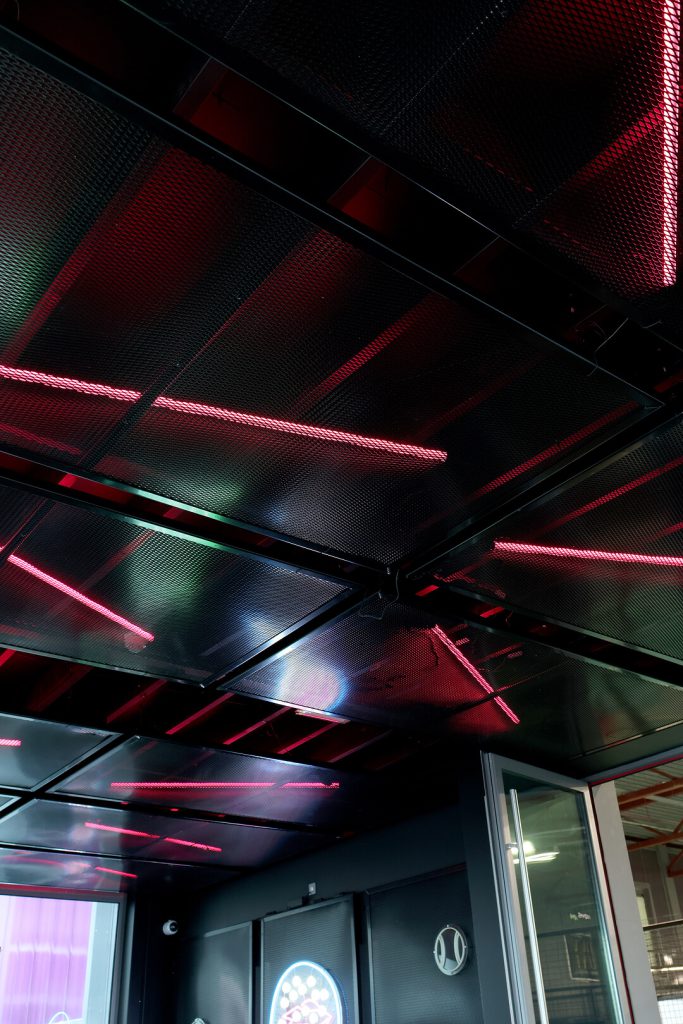
Lighting specification influences both playing quality and operational expenditure.
Lux Levels
Illumination should meet appropriate lux requirements for recreational or competitive play. Over-specification increases cost, while under-specification reduces playability and limits event potential.
Uniformity
Even light distribution across the court is as important as the overall lux level. Poor uniformity creates visual inconsistency and player discomfort.
Pole positioning and fixture angle require careful coordination with court layout and surrounding structures.
Glare Control
Glare can impact:
- Player visibility
- Neighbour amenity
- Planning approval
Optical control systems and fixture design should minimise spill and direct light precisely onto the playing surface.
Operating Costs
LED lighting systems offer:
- Reduced energy consumption
- Lower maintenance requirements
- Longer lifespan
However, operating cost modelling should still account for peak simultaneous use, particularly in multi-court facilities.
For a more detailed examination of lighting specification and performance, see:
6. Facility Layout & Revenue Integration
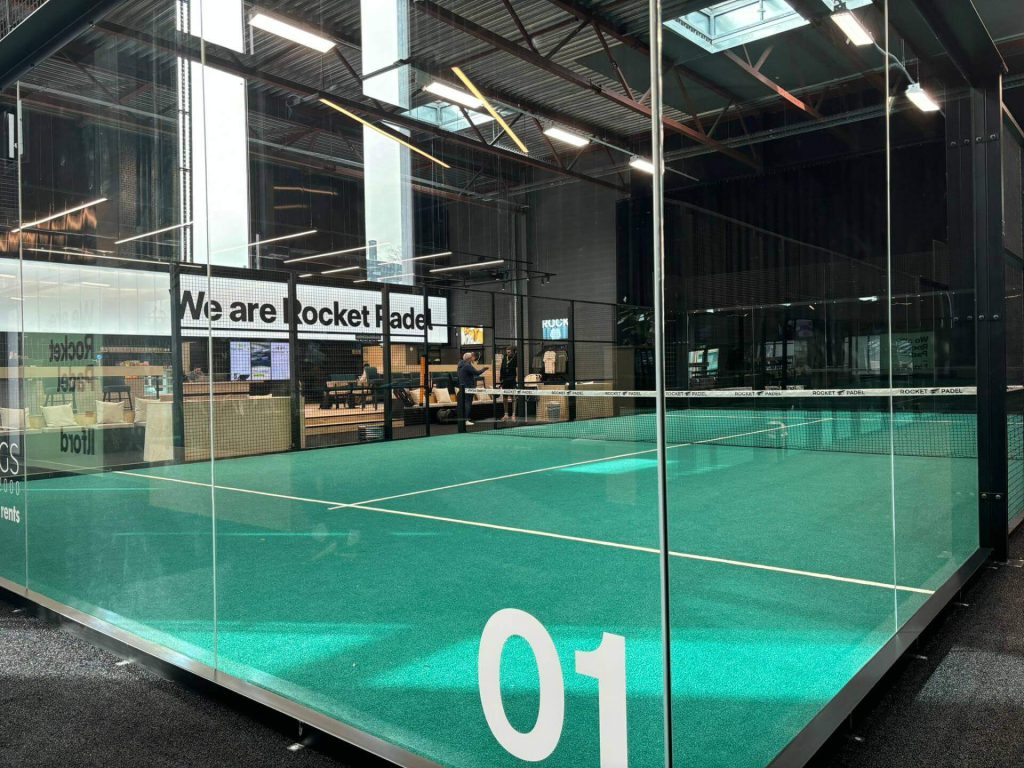
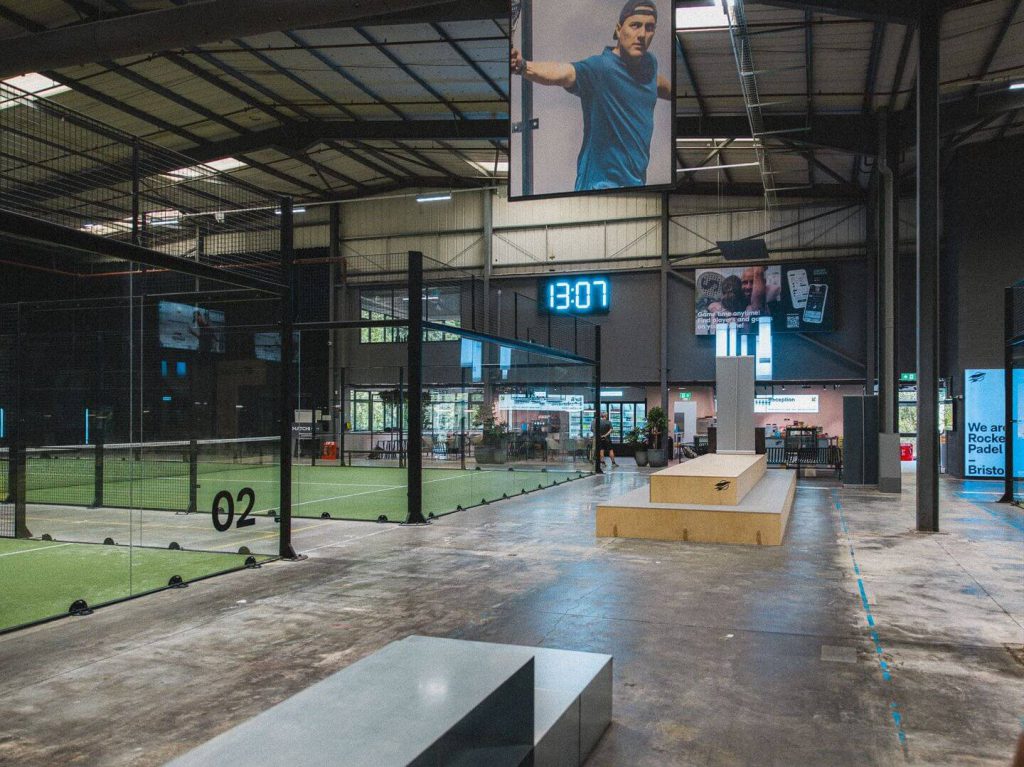
Court construction alone does not determine the success of a padel facility. Layout strategy, how players move, where spectators stand, how revenue spaces integrate, is often the true differentiator between a well-performing club and a technically competent but commercially under-optimised venue.
This is where padel shifts from being a sports installation to becoming a leisure environment.
6.1 Circulation & Player Flow
Efficient movement within the facility influences safety, comfort and dwell time.
Between Courts
Spacing between courts must allow for:
- Safe access and egress
- Uninterrupted player movement
- Equipment storage
- Cleaning and maintenance access
Overly compressed layouts may maximise court count but reduce comfort and perceived quality.
Clear walkways between courts improve user experience and support spectator viewing.
Spectator Routes
Padel is inherently social. Spectator visibility and informal viewing areas are important for:
- League nights
- Tournaments
- Corporate bookings
- Coaching sessions
Circulation should prevent congestion around court entrances while maintaining strong sightlines.
Designing for spectators increases dwell time and encourages secondary spend.
Coaching Zones
Structured coaching programmes require defined areas for:
- Group instruction
- Junior sessions
- Performance training
Separating coaching from peak recreational use can improve scheduling efficiency and reduce operational friction.
Dedicated zones also support consistent programme delivery and higher yield per court hour.
6.2 Ancillary Revenue Spaces
High-performing facilities rarely rely solely on court hire. Ancillary spaces contribute materially to revenue and brand positioning.
Reception
Reception functions as:
- First point of contact
- Booking control hub
- Membership management point
It should provide clear sightlines to courts while maintaining efficient circulation.
Café / Bar
Food and beverage offerings increase:
- Dwell time
- Average transaction value
- Community atmosphere
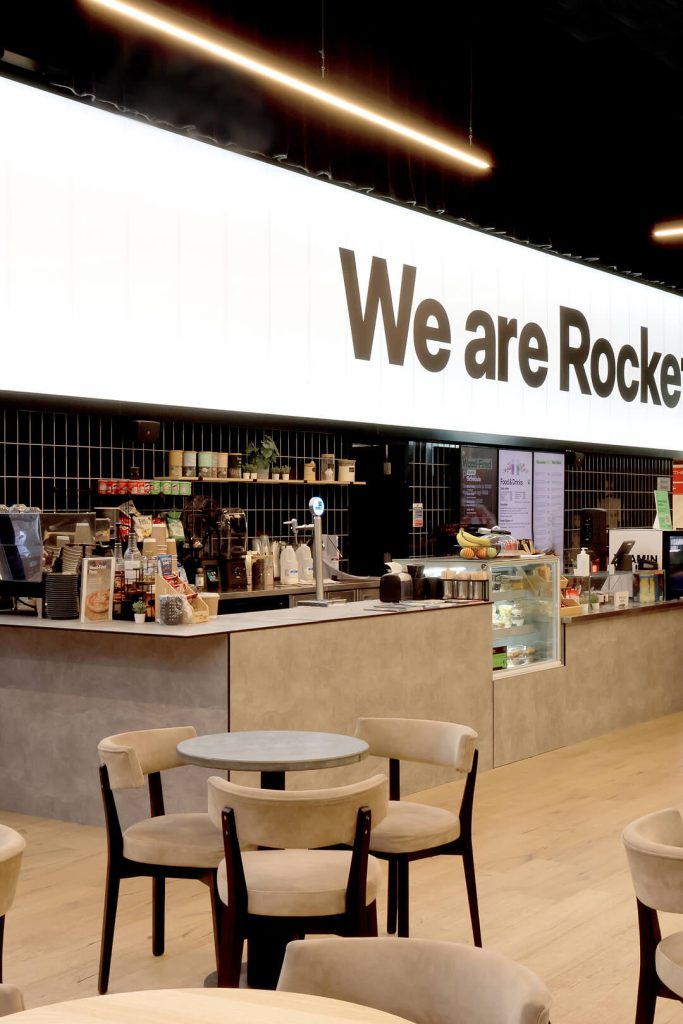
Positioning the café adjacent to viewing areas encourages post-match engagement and repeat visits.
Retail
Retail zones can include:
- Rackets and balls
- Branded merchandise
- Accessories
While retail rarely forms the primary revenue stream, it reinforces brand identity and supports coaching programmes.
Events
Designing flexible space for events supports:
- Corporate bookings
- Tournaments
- Social leagues
- Launch evenings
Movable furniture, adaptable seating and clear circulation routes allow the facility to transition between everyday use and event mode.
6.3 Multi-Court Scalability
The layout strategy differs significantly between small and larger facilities.
2 vs 4 vs 6+ Court Layouts
A two-court facility may function efficiently within a compact footprint but has limited programming flexibility.
Four courts introduce:
- Simultaneous league scheduling
- Junior academy sessions
- Tournament viability
Six or more courts support:
- Larger-scale events
- Corporate exclusives
- Higher occupancy stability
However, increased court count must be balanced with adequate ancillary space and parking provision.
Phased Expansion
Where site constraints allow, designing for phased expansion can reduce long-term capital risk.
This may include:
- Reserving structural capacity
- Designing utilities with future load in mind
- Allowing circulation corridors for additional courts
Phased growth enables operators to validate demand before committing to full-scale development.
Facility layout directly influences both operational efficiency and revenue optimisation. When integrated thoughtfully, circulation, ancillary spaces and scalability transform a group of courts into a commercially resilient leisure venue.
7. Construction Programme & Phasing
A realistic programme is essential to align capital expenditure, planning approvals and operational launch. While individual court installations may appear relatively quick, the overall development timeline for a commercial facility is influenced by surveys, planning, procurement and utility coordination.
Understanding sequencing at the outset reduces the risk of delay and cost escalation.
7.1 Pre-Construction
The pre-construction phase establishes technical certainty and regulatory compliance before mobilisation.
Surveys
Pre-construction surveys typically include:
- Topographical survey
- Ground investigation
- Utility location survey
- Structural assessment (for indoor conversions)
These inform slab design, drainage strategy and installation methodology.
Planning Timeline
Planning decisions can significantly affect programme duration. Even where approval appears straightforward, local authority timelines often extend beyond statutory minimums.
Factors influencing the timeline include:
- Requirement for noise assessments
- Lighting reports
- Highways consultation
- Environmental conditions
Allowing adequate time for pre-application engagement and decision-making reduces the risk of late-stage redesign.
Tendering
Engaging specialist contractors through a structured tender process improves cost certainty.
Tendering should clarify:
- Scope of works
- Programme expectations
- Installation tolerances
- Warranty provisions
Clear documentation at this stage avoids ambiguity during construction.
7.2 Procurement Lead Times
Material procurement often runs in parallel with planning approval to protect the programme.
Glass Manufacturing
Tempered safety glass panels are typically manufactured to specification. Lead times can vary depending on:
- Supplier capacity
- Volume of courts
- Transport logistics
Early confirmation of glass orders reduces the risk of site delay.
Steel Fabrication
Steel frames may require:
- Fabrication
- Galvanising
- Coating
Coordinating fabrication schedules with slab completion ensures installation can proceed without interruption.
Electrical Infrastructure
Lighting columns, fixtures and electrical components must align with:
- Approved lighting design
- DNO coordination (if supply upgrade required)
- Internal distribution boards
Electrical lead times can impact commissioning dates if not planned in advance.
7.3 On-Site Programme
On-site sequencing must account for structural curing, installation tolerances and safety compliance.
Groundworks
Groundworks typically include:
- Excavation
- Sub-base installation
- Drainage infrastructure
- Slab and ring beam formation
Weather conditions can materially affect the programme during this phase.
Slab Cure Time
Concrete curing periods must be respected before enclosure installation begins. Accelerated installation on insufficiently cured slabs can compromise long-term structural performance.
Programme allowances should incorporate curing timelines.
Installation Sequencing
Installation generally follows a structured sequence:
- Structural frame placement
- Glass panel installation
- Mesh enclosure completion
- Turf installation and sand infill
- Lighting installation
- Final alignment and inspection
Correct sequencing protects material integrity and ensures tolerance accuracy.
Commissioning
Commissioning confirms that:
- Lighting meets the required lux levels
- Access control systems function correctly
- Drainage performs under load
- Safety checks are complete
Only after commissioning should the facility proceed to soft launch.
While a single-court installation may take only a matter of weeks under ideal conditions, full commercial facilities, particularly multi-court or indoor conversions, often require significantly longer when pre-construction, procurement and commissioning are properly accounted for.
For a broader technical overview of build sequencing and installation stages, see:
Padel Court Construction Timeline
8. Operational Readiness & Long-Term Maintenance
Construction completion does not mark the end of delivery. A padel facility only begins to prove its value once it is operational, programmed and maintained effectively.
Operational readiness should be considered well before the final installation phase. Systems, staffing and maintenance strategy must align with the commercial assumptions established during feasibility.
8.1 Booking Systems
Efficient booking infrastructure underpins revenue management and customer experience.
Playtomic and Similar Platforms
Many UK facilities utilise specialist racquet-sport booking platforms such as:
- Playtomic
- Nettl / Nettla
- Matchi
- Padel-specific integrations
These platforms typically manage:
- Court reservations
- Membership subscriptions
- Coaching sessions
- Event registration
- Payment processing
The chosen system should align with pricing strategy, membership model and operational scale.
Access Control
Automated access systems can:
- Enable unmanned early or late sessions
- Reduce front-of-house staffing during off-peak hours
- Improve security
However, fully automated models still require oversight, particularly for multi-court facilities with coaching and events.
Access systems should integrate seamlessly with booking software to prevent unauthorised use.
8.2 Staffing & Programming
High-performing facilities are actively programmed rather than passively operated.
Coaching
Structured coaching programmes:
- Drive recurring revenue
- Improve retention
- Build junior academies
- Increase midweek utilisation
Dedicated coaching blocks must be balanced against peak recreational demand.
Leagues
League formats and organised play increase engagement and community development.
Regular leagues:
- Stabilise booking patterns
- Encourage repeat visits
- Strengthen long-term membership
Facilities designed with social areas and spectator routes tend to support league culture more effectively.
Corporate & Events
Corporate bookings and private events can deliver high-yield usage during off-peak hours.
Flexible layout design and ancillary spaces enhance the ability to host:
- Team-building events
- Tournaments
- Product launches
- Social evenings
Operational planning should incorporate event scheduling capability from the outset.
8.3 Maintenance Regime
A proactive maintenance strategy protects both safety and lifecycle cost.
Turf Brushing
Regular brushing redistributes sand infill and preserves consistent playing characteristics.
Frequency depends on usage intensity but should form part of a scheduled maintenance plan.
Glass Inspection
Glass panels and structural fixings require periodic inspection to identify:
- Movement
- Seal wear
- Hardware loosening
Early intervention reduces the risk of breakage or structural stress.
Lighting Checks
Lighting systems should be inspected for:
- Alignment accuracy
- Lux performance
- Electrical integrity
Consistent illumination maintains safety and professional presentation.
Replacement Cycles
All components have finite lifespans. Long-term budgeting should anticipate:
- Turf replacement
- Lighting upgrades
- Access control updates
- Structural refurbishment where required
Planning for replacement cycles protects capital investment and prevents unexpected operational disruption.
For a more detailed breakdown of lifecycle maintenance considerations, see:
Conclusion
Building a padel facility is not a retail purchase.
It is a commercial leisure development.
The difference matters.
In the UK, projects must navigate planning policy, noise sensitivity, lighting compliance, drainage performance, structural tolerances and long-term operational viability. Climate, regulation and density create layers of complexity that cannot be solved by simply “buying a court system.”
Successful delivery requires:
- Proper feasibility analysis
- Structured planning engagement
- Engineered ground and structural design
- Thoughtful facility layout
- Operational modelling
- Long-term asset strategy
When these elements are addressed cohesively, a padel facility becomes a resilient commercial asset rather than a speculative installation.
Reluxe approaches padel development as an integrated engineering and commercial process, delivering facilities that are compliant, technically robust and financially viable within the UK regulatory environment.
If you are considering a new project, early-stage clarity is the most valuable investment you can make.
Feasibility Consultation
Structured commercial and technical review before capital commitment.
Early-Stage Advisory
Planning strategy, risk identification and development roadmap support.
The right decisions made early determine the long-term performance of the facility.